


These days, many of us tend to think of coders, algorithms and AI as a predatory threat stalking our online communication environment, and all too often that is true. But here is an inspiring example of an effort to put these skills and technologies to vital use in an unfolding catastrophe.
Jorge Bastidas normally spends his days in Buenos Aires as CTO of The Empire, a small Florida-registered company building the online impact of a variety of clients around the world — from a natural-dog-food company to EmpathyAI. When Venezuela was shattered by double-barreled earthquakes one week ago, with some people he worked with among the tens of thousands affected, Bastidas abruptly shifted gears in a powerful way.
This Sustain What episode is part of the six-years-and-running track on Sustain What called Thriving Online. Explore the YouTube playlist here.
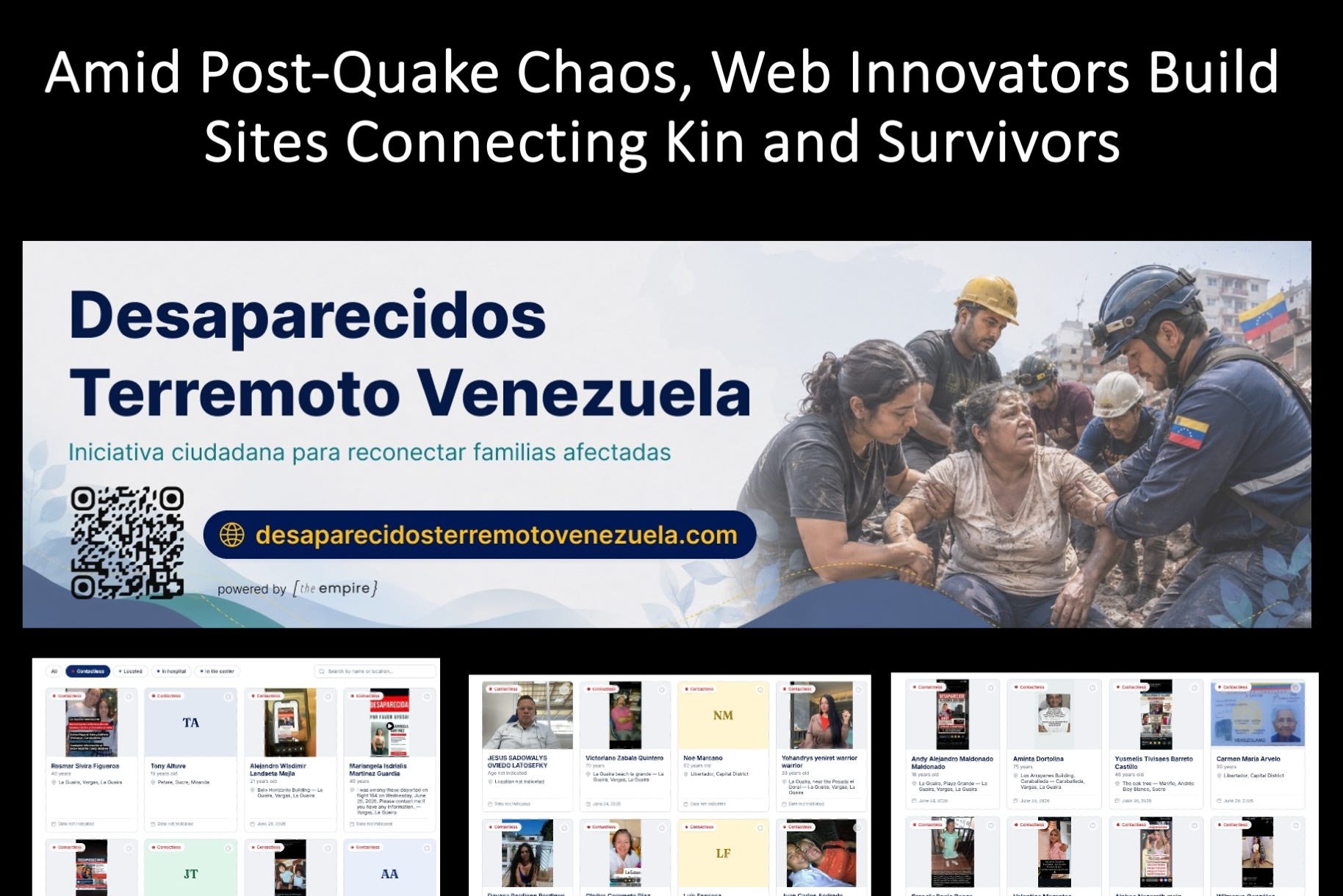
Facing communication blackouts and a desperate need to connect survivors with families, he and a fast-expanding team launched a portal for exchanging information among families and friends of those missing and hospitals and rescue teams handling an influx of survivors. Go explore desaparecidosterremotovenezuela.com and then come back to listen to how the project came to be, what it is achieving and what the emerging toolkit can do in the next disaster (or war zone). If you don’t have time to click, here’s a sample of what you see. Each image is someone missing or someone found but not connected to a family.
Bastidas tells me they making everything open source for use in future calamities. You can contact him to help at contacto@theempire.tech.
“This is our tragedy, this is our earthquake,” he told me. “But in all over the world, things like this happens every day. So we want to share this with the community so they can apply this same technology on every disaster or another emergency situation when people need it.”
Here’s one powerful moment for starters. As we spoke and I scrolled the list of images of the missing, I noted that there were 2,920 pages to click through. He grew emotional, raising his palms to his face and agreeing, “That is a lot of pages.”
Adaptive networks in a crisis
What’s most interesting to me is how Bastidas and hundreds of dispersed volunteers now working with him quickly diverted from their normal lives, taking their skills and applying them in a new way in a crisis. They are demonstrating that #AIForGood is not just a hashtag and programmers for good exist.
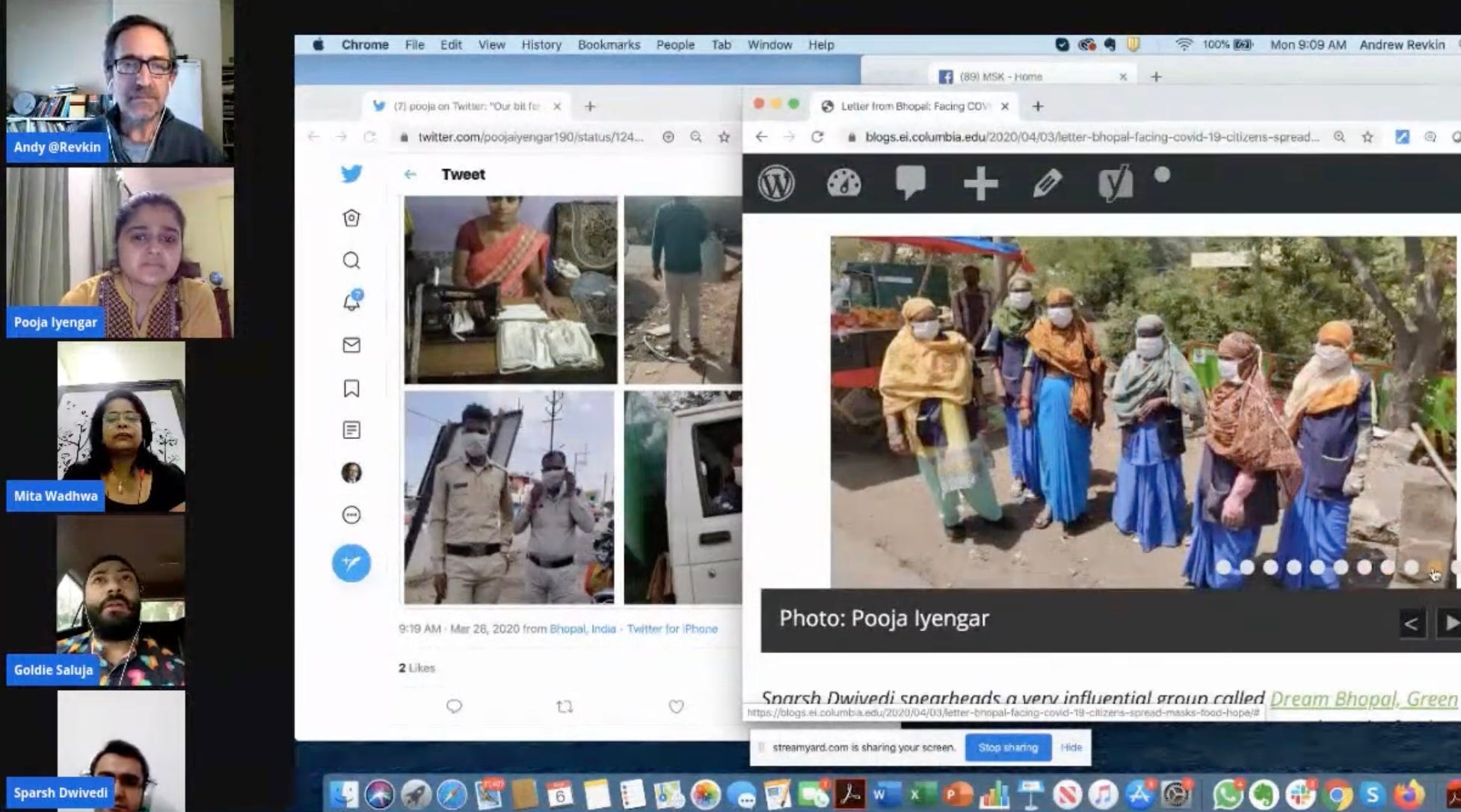
That pattern reminds me of a show I did early in the COVID-19 pandemic, as India locked down and its poorest citizens faced starvation even in big cities. A small nonprofit group focused on reducing plastic waste in Bhopal became a food distribution network. Listen to them and you’ll recognize the pattern.
Here’s Gemini’s summary of my conversation on the reconnection website (from the YouTube stream):
Rapid Response: Within an hour of the disaster, Bastidas and his team began building a database-driven platform from scratch to help people report missing relatives and allow others to update their location (4:36 - 5:31).
Tech Stack: The team utilized TypeScript for the front and back end, and AWS for hosting, implementing security measures like reCAPTCHA and firewalls to manage the massive influx of traffic (7:16 - 8:58).
Collective Impact: The initiative has expanded significantly, involving hundreds of volunteers, auditors, and integration partners who use the platform’s API to share data with organizations like the UN (13:33 - 14:58).
Facial Recognition: Collaborating with the company Lab Co, they integrated an AI-based facial recognition tool. This allows hospitals to upload photos of patients, which can then be matched against reports submitted by families (9:53 - 12:28).
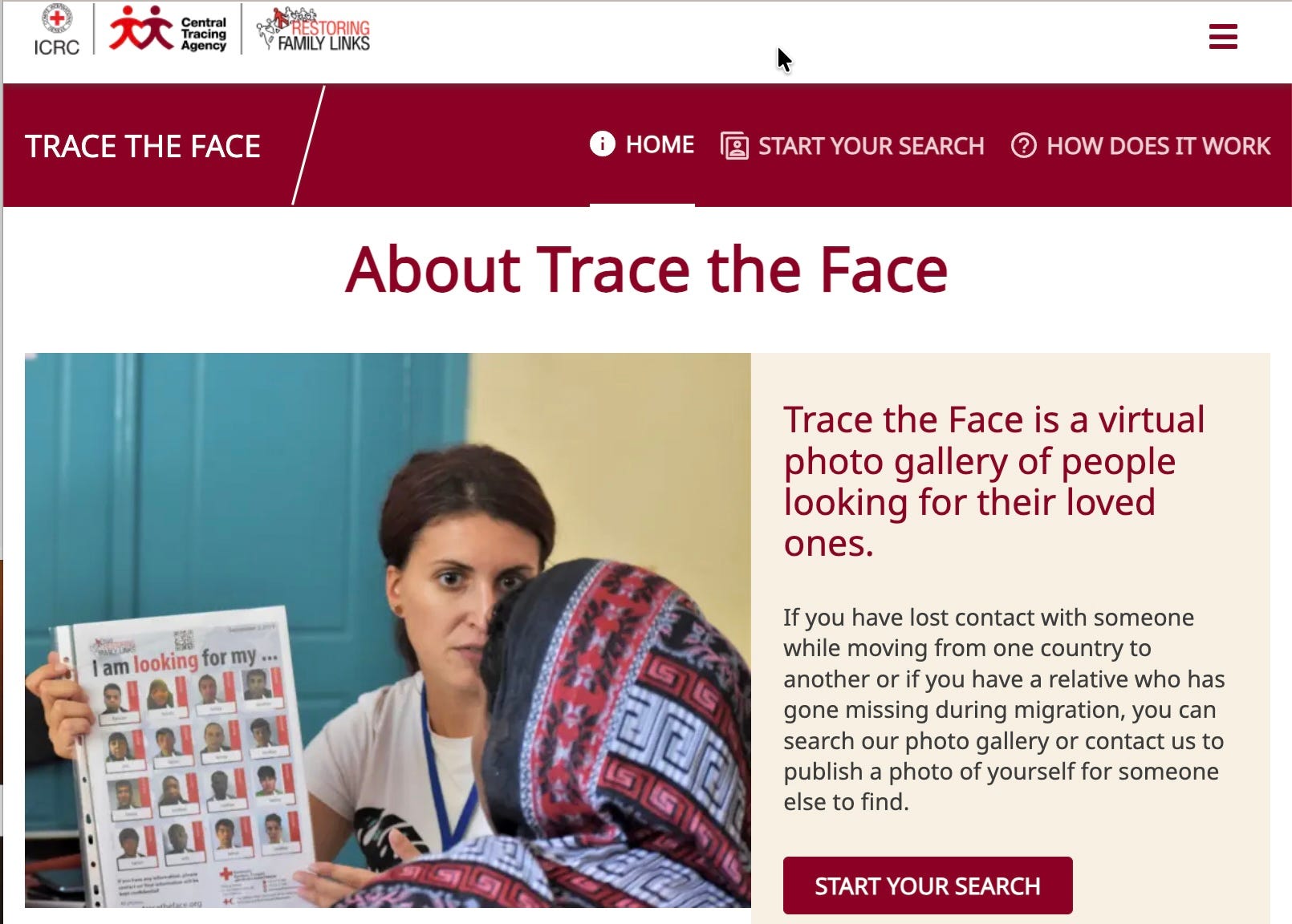
I note that the facial recognition effort reminded me of “Trace the Face,” a longstanding project of the International Committee of the Red Cross that works this way: “If you have lost contact with someone while moving from one country to another or if you have a relative who has gone missing during migration, you can search our photo gallery or contact us to publish a photo of yourself for someone else to find.”
Thank you to everyone who tuned in live. Subscribe to be sure you get alerts when I do this kind of pop-up segment.
Rather than encouraging those who can afford it to chip in for Sustain What, I urge you to make a donation to Give Directly’s dedicated fund for Venezuelans facing the extraordinary challenge of rebuilding lives in a country beset by troubles well before this seismic nightmare. I just did.
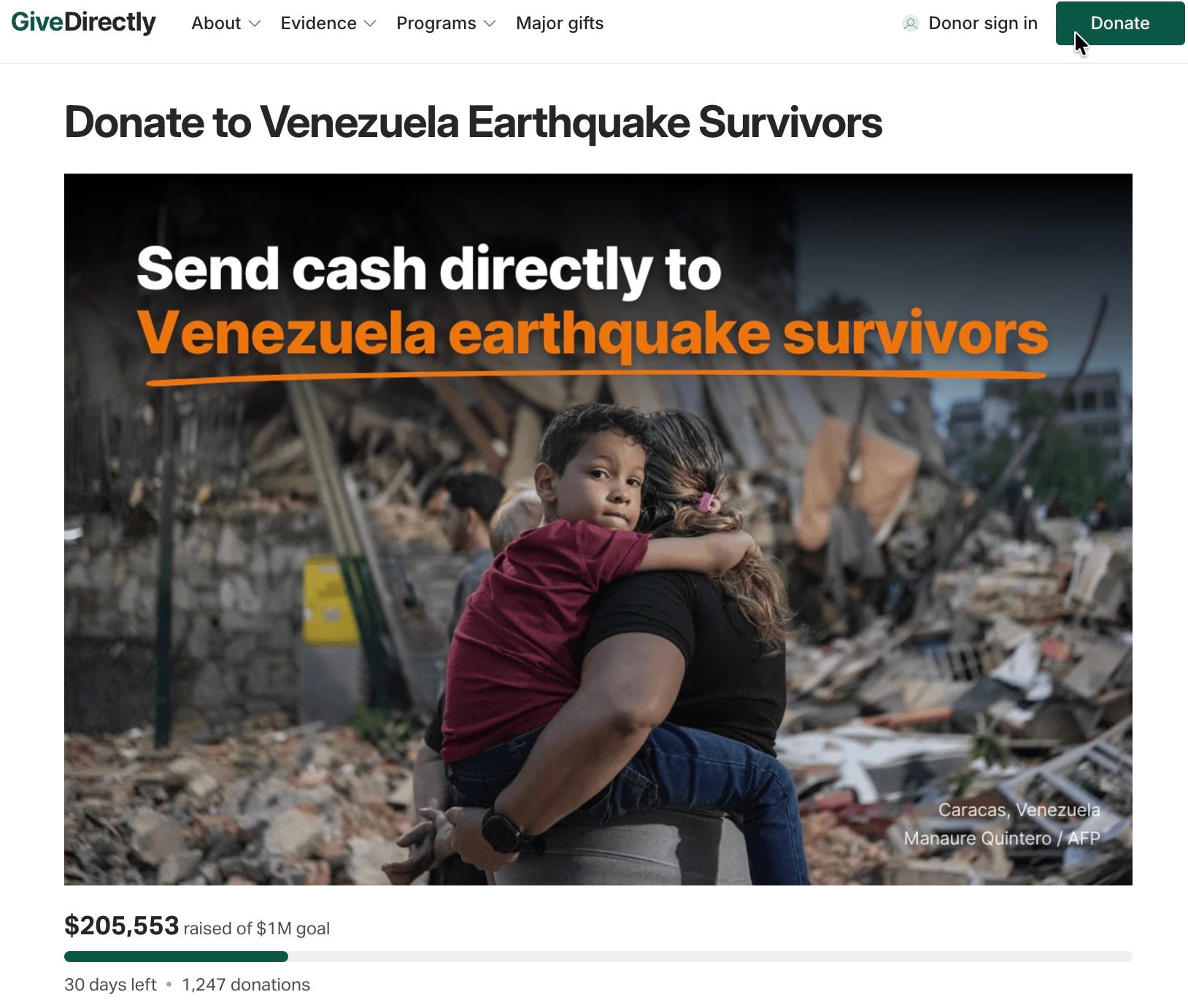
As I’ve written before, this nonprofit tries to get direct benefits to those in need as a way to cut through bureaucracy. I’ve become convinced of the value of this strategy in large part through Matthew Yglesias’s writing and Slow Boring ’s support for them. Their “Emergency Cash team is entering Venezuela today,” the group just reported on its website.


