


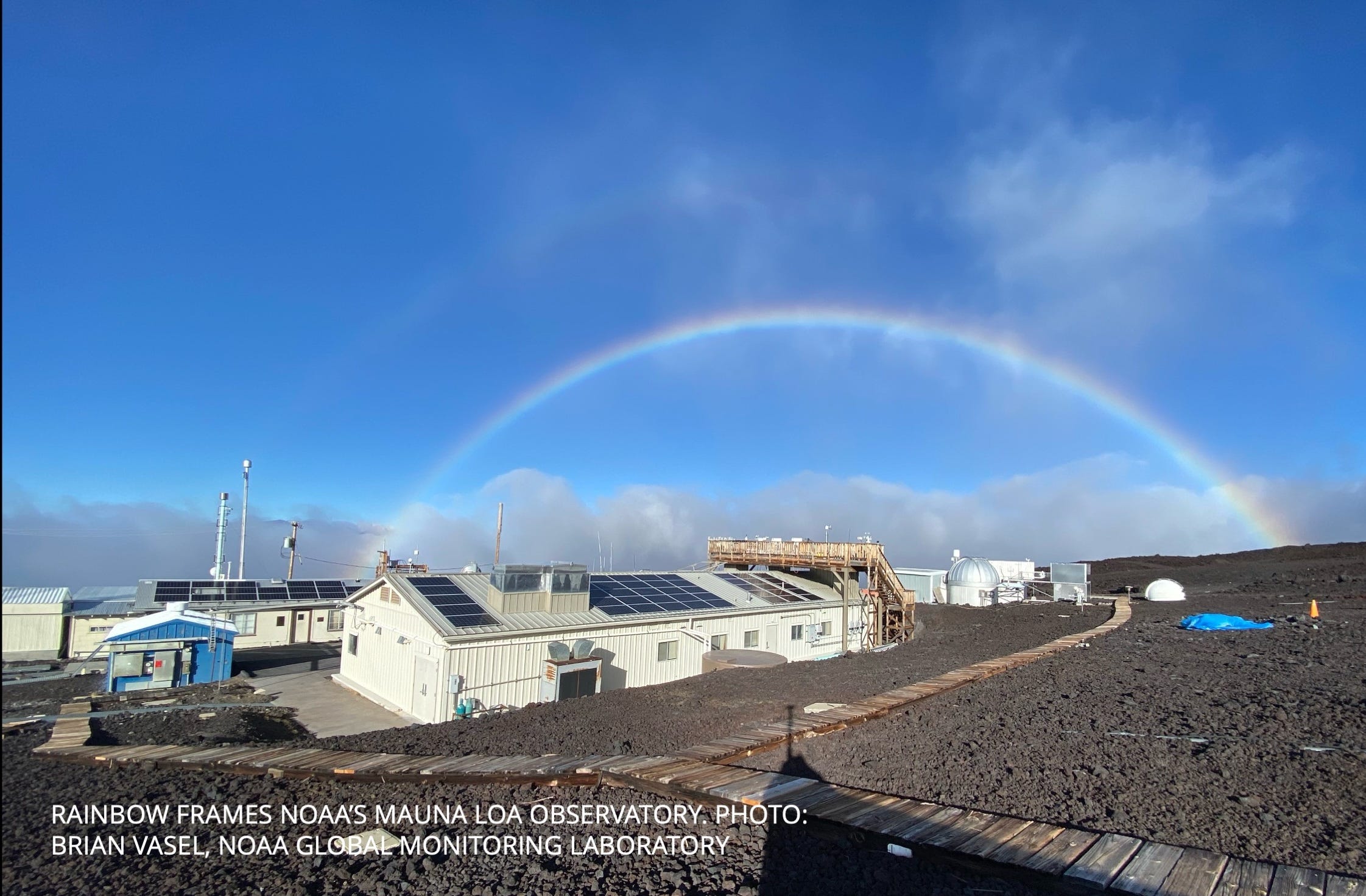
I just hosted a great discussion of the importance of bolstering long-term observational science and the capacity to integrate findings into decision making and policy.
As I wrote in the curtain raiser post on Thursday, what drives me nuts is that even scientists who think global warming warnings are way over the top agree on this fundamental point about long-term monitoring. I have to post this section of my mind-blowing 2017 ProPublica conversation with Will Happer, who was a top candidate for science advisor in Trump’s first term and who is in/famous for his assertion that more carbon dioxide is great.
He said this:
One of our problems in climate is that you need long-term good science — for example long-term temperature records, long-term records of CO2, and it’s very hard for the government to support that kind of stuff because you go to Congress and they say, ‘Isn’t that what you were doing 20 years ago or 50 years. Aren’t you finished yet?’
…I’m all for climate science, you know. If I were King, I would maintain and improve, if I could, any measurement systems we have — satellites, ocean buoys. I think those are wonderful things.
President Trump has done grievous damage to such capacities in his second term (see links at the bottom), although thankfully Congress has blunted the spending cuts.
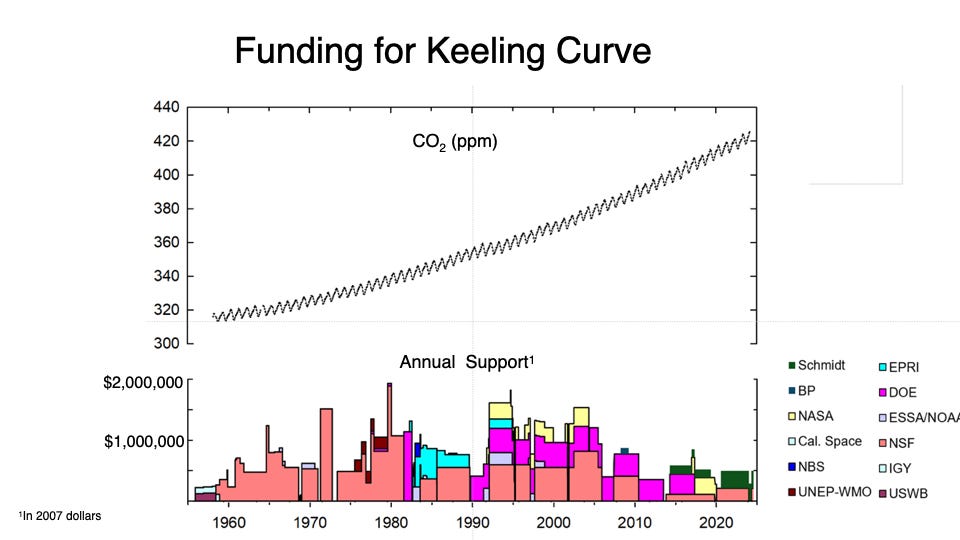
The discussion centered on the work of the Keeling Curve Foundation, which is trying to build momentum for philanthropic, governmental and private-sector investment in Earth observation capacity.
One indicator of trouble is the declining budget for maintaining the flow of data behind the iconic “Keeling Curve” of carbon dioxide concentrations, generated through decades of work by Charles David Keeling and now his son Ralph,
Here’s the introuctory post with more info on my guests: Ralph Keeling, the climate-focused Stanford ecologist Chris Field and Betsy Weatherhead, a leading researcher focused on earth observation science and technology.

Here are a couple of highlights. But do watch (and share!) the conversation!
Ralph Keeling explains how sustained atmospheric monitoring revealed both the problem posed by ozone-destroying chlorofluorocarbons, the decline of the synthetic compounds under the Montreal Protocoal - AND a suspicious resurgence of CFC-11 that led to the discovery that Chinese companies were cheating:
I asked Betsy Weatherhead what would signal a revival of commitments to keep this planet closely observed and she said it’s already happening - to a significant extent overseas:
Thanks for supporting what I do here by subscribing - including chipping in a bit financially if you can.
Relevant coverage and context
From satellites to services: Financing Earth observation for public value (ECDPM think tank)
https://ecdpm.org/work/satellites-services-financing-earth-observation-public-value
NOAA Defends Cuts to Research and Climate Monitoring at Budget Hearing
https://insideclimatenews.org/news/29042026/noaa-defends-trump-cuts/
‘It’s just madness’: Trump administration to close three-quarters of Forest Service research stations (Bulletin of the Atomic Scientists)
https://thebulletin.org/2026/04/its-just-madness-trump-administration-to-close-three-quarters-of-forest-service-research-stations/
How the Trump Administration Ended Independent Science at the E.P.A. (The New York Times)
https://www.nytimes.com/2026/04/27/climate/epa-science-trump-cuts.html
Designing the Climate Observing System of the Future (Earth’s Future; research paper led by Betsy Weatherhead)
https://doi.org/10.1002/2017EF000627
And thank you to everyone who tuned into my live video! Join me for my next live video in the app.


