

Meet U.S. Scientists Working in Greenland Who are Urging Trump and Congress to Respect Greenlanders
A special pop-up Sustain What show on Arctic tussles and solutions

Post-webcast updates - I hope you’ll watch this conversation with authors of a new joint statement of support for Greenlanders from 200 (and counting) American scientists who’ve worked on that vast ice-sheathed island. The statement seeks respect and security for 57,000 Greenland citizens and for adherence to international norms more than a particular outcome.
The statement is below, along with a link to the full list of signatories and additional statements by individual researches.
Watch on Facebook, YouTube, Linkedin, and X (@revkin).
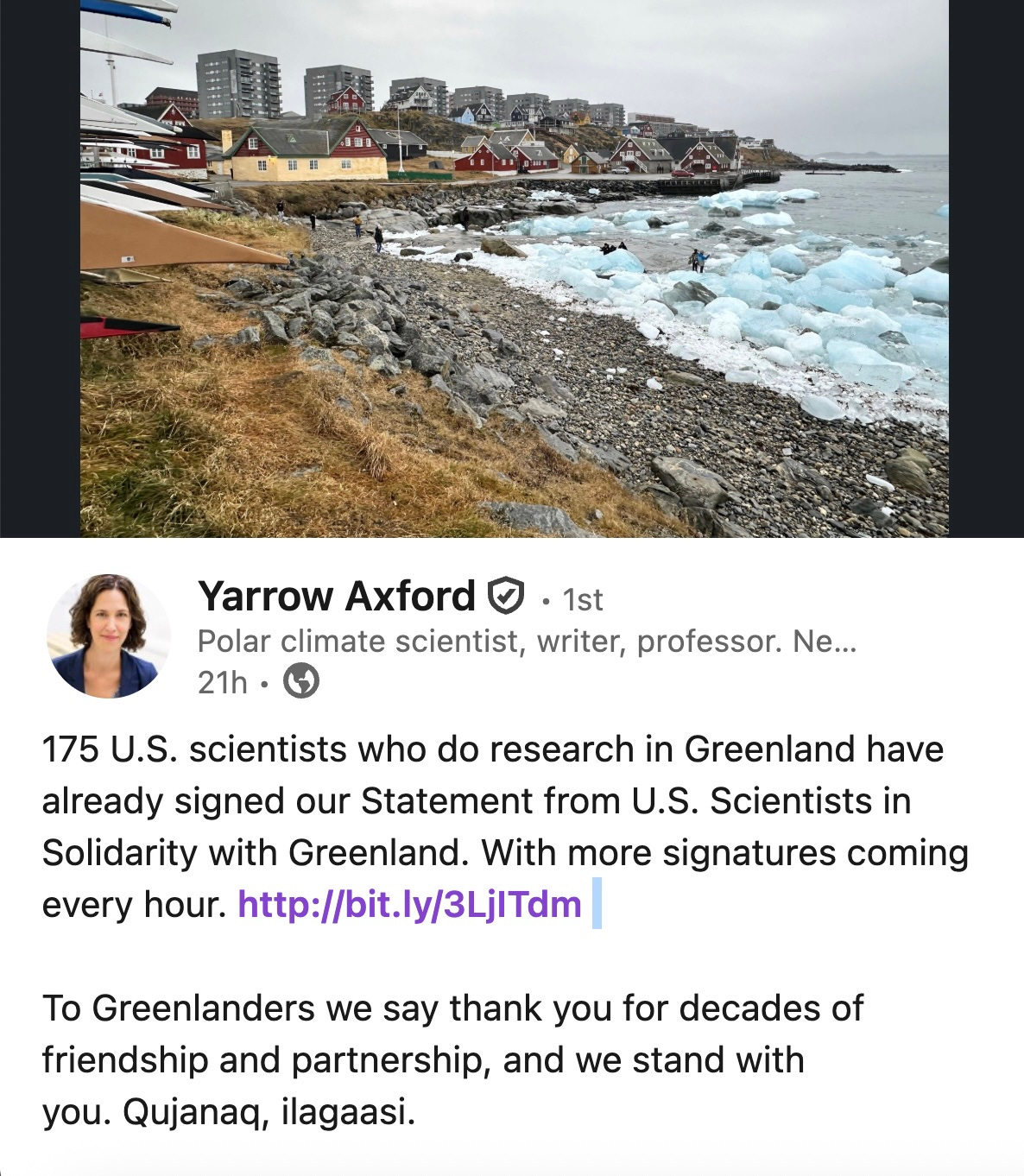
I spoke with were Paul Bierman, a longtime University of Vermont climate researcher whose work I’ve cited many times (and whose earlier piece on Trump and Greenland was cross-posted here on Sustain What), and Yarrow Axford, who has done cutting-edge research at Northwestern University on the pace of Greenland’s ice loss and whose LinkedIn post about the statement prompted me to schedule this webcast.
I’m adding some related reading and resources below so we can explore the complex dynamics obscured by the meme wars and the intentionally attention-seeking bellicose big-stick statements by Trump and his sycophants.
The threats are classic Trump, like this statement during his meeting on Friday with a roomful of oil company executives on how to revive Venezuela’s oil output:
We are going to do something on Greenland, whether they like it or not, because if we don't do it, Russia or China will take over Greenland — and we're not going to have Russia or China as a neighbor. I would like to make a deal the easy way. But if we don’t do it the easy way we’re going to do it the hard way.
Believe it or not, there are subtle signals of paths forward that do strengthen ties with the United States without gunboats. (Get to know the phrase “Freely Associated States”; more on that below.)
Keep in mind Greenlanders strongly prefer independence from all colonial-style states, including the Kingdom of Denmark. As one woman interviewed by Rory Challands for Al Jazeera put it, “Of course I’m a little bit worried that we stand in between and we have nothing to say.”
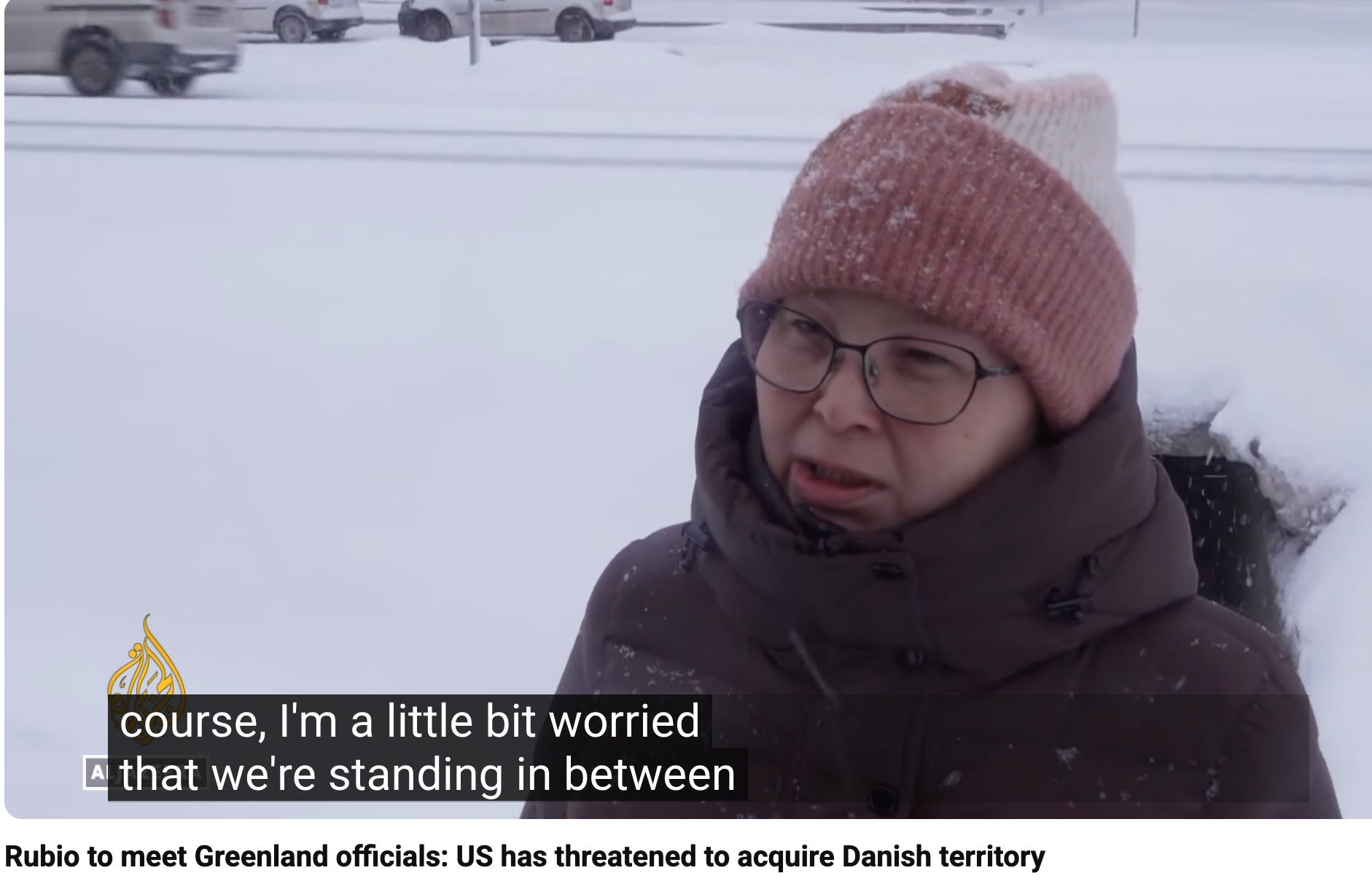
Challands’ closing line crystallizes the issue Trump’s bullying signals: “It’s possible they’re about to get an offer they can’t refuse.”
Find more on the strategic questions and options below.
My work on Greenland’s future and Arctic security
I grew up loving the tropics and temperate zones but was drawn to the Arctic as a reporter through my decades of climate journalism and ended up going three Times as a reporter - to the drifting, thinning sea ice at the North Pole and the thawing tundra of Alaska’s North Slope in 2003 and to Greenland’s west coast and two-mile-high ice-sheet summit in the spring of 2004.
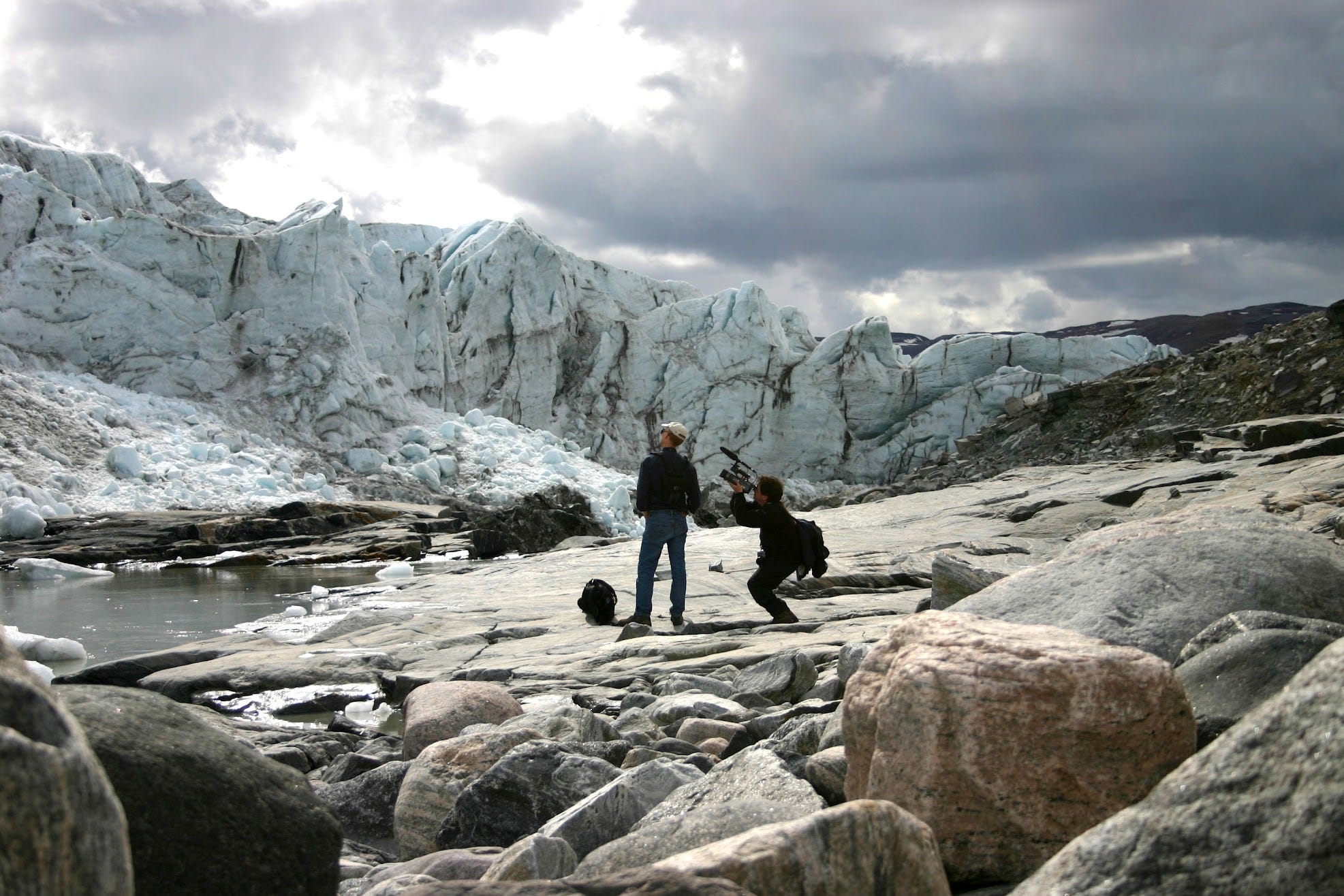
I headed to Greenland to report on momentous questions around how fast its melting ice sheet - five times the size of California - could raise global sea levels. A lot of my Arctic reporting is aggregated on this antique archived New York Times page, including my first real blogging effort - a series of Postcards from the Arctic from Greenland.
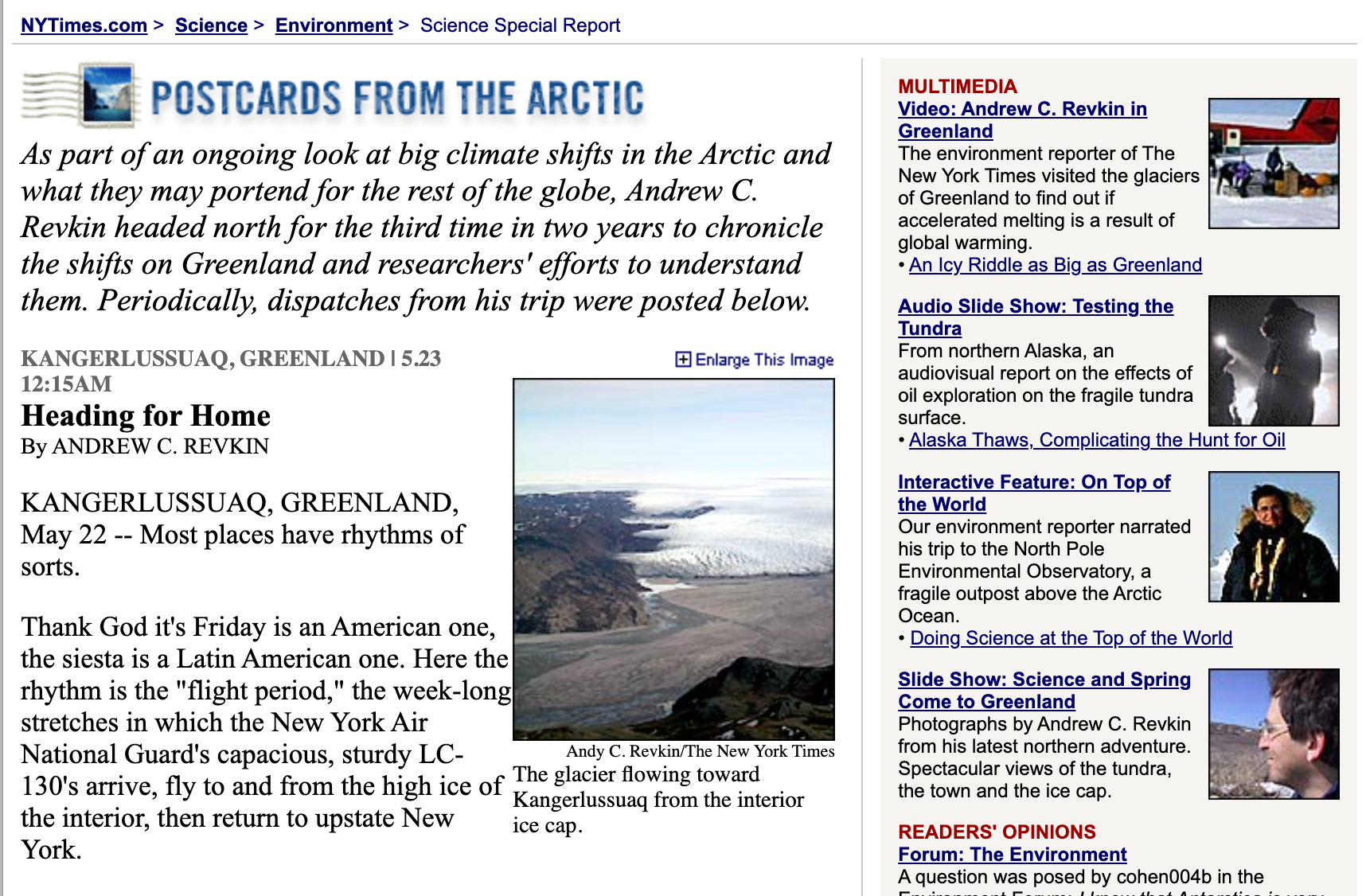
Both on that Greenland reporting trip and in countless interviews with experts about research there and about Arctic change and security more generally, I got to know and respect a lot of scientists from the United States and elsewhere devoting careers to this question. The field work was dangerous and sometimes deadly. Their views deserve airing here. Read and weigh in and share! I’ll leave the comment thread open to all (normally it’s restricted to paying subscribers).
Here’s the statement, followed by some valuable geopolitical analysis and other related information:
Statement from U.S. Scientists in Solidarity with Greenland
Amerikarmiut Kalaallit Nunaanut misissuiartortartut nunatsinnut ataqatigiinerannut oqaaseqaataat
January 9, 2026 / Jannuaarip arfineq sisamaat, 2026
We are U.S.-based scientists who have conducted research in Kalaallit Nunaat / Greenland, and we write to express our solidarity and gratitude to Greenland’s people for years of friendship and partnership. This statement follows a letter signed by more than 350 scientists in response to the U.S. Senate hearing about Greenland in February 2025, and acts of solidarity at Arctic Science Summit Week in Colorado in March 2025.
We vehemently oppose President Trump’s aggressive stance regarding Greenland, and reiterate – as Greenland’s leaders have clearly stated – that Greenland is not anyone’s to “buy” or “take.” Greenland belongs to its people.
“We have been America’s close and loyal friend for generations,” Greenland’s prime minister Jens-Frederik Nielsen said earlier this month. “Enough is enough. Greenland is our home and our territory.”
Greenland deserves the world’s attention: It occupies a key position geopolitically and geophysically. As climate warms, rapid loss of Greenland’s ice affects coastal cities and communities worldwide. Greenland’s natural resources are abundant – and they belong to Greenland. But most importantly, Greenland is home to almost 57,000 people, the vast majority of whom have roots there that reach through countless generations.
Greenland’s people have been strong allies and friends to Americans for decades, despite painful colonial legacies like the forced relocation of Inughuit people from their ancestral homes to build Thule Air Base (now Pituffik Space Base) in 1953. Americans owe Greenland our respect and deep gratitude. We acknowledge that scientific research also has a colonial history in Greenland, and pledge to be good partners, with guidance from Greenland’s researchers and by honoring Greenland’s National Research Strategy.
We spotlight Dr. Sara Olsvig, Chair of the Inuit Circumpolar Council, who urged mutual respect and cooperation when President Trump’s rhetoric about acquiring Greenland flared up in January 2025: “We recognize and are acutely aware that the current geopolitical situation is challenging,” she said in a formal statement. “But times have changed since Inuit lands were mere commodities that could be bought and sold. In today’s world, we are active participants in decision-making about our lands and resources.”
By collaborating and sharing their extensive knowledge, offering friendship and countless forms of research support, and allowing foreign scientists to conduct research on their land, Greenland’s scientists and citizens have made enormous contributions to the world’s understanding of the Arctic and how rapid Arctic changes are affecting people around the world. To Greenlanders: Qujanaq, and we stand with you.
To Americans and our senators and representatives in Washington, D.C.: Please join us in vocally supporting Greenland’s right to self-governance, towards a future of peaceful, productive engagement between allies.
Read a heap of personal statements by many of the signatories at the statement page.
Further reading and viewing
Politico Europe just published one of the most illuminating pieces on how things could play out as Trump and Marco Rubio and the rest tighten the vise. The headline is a bit click-baity and of course this won’t be “easy” one way or the other, but do read it: How Trump gets Greenland in 4 easy steps.
Step 1: Influence campaign to boost Greenland’s independence movement
..Meanwhile, U.S. Vice President JD Vance, on a visit to the territory in March, said “the people of Greenland are going to have self-determination.” He added: “We hope that they choose to partner with the United States, because we’re the only nation on Earth that will respect their sovereignty and respect their security.”
This is already happening, according to Danish investigative reporters citing Danish intelligence sources in August
three Americans with connections to Donald Trump who are conducting covert influence operations in Greenland.
This is the assessment of central government and authority sources as well as sources in Greenland and the USA, with whom DR has held several meetings since the inauguration of Donald Trump as president in January this year.
It is the sources themselves who use words like “infiltration” and “influence operations”, and who assess that the goal of the operations is to penetrate Greenlandic society in order to weaken relations with Denmark from within and make the Greenlanders submit to the United States.
Step 2: Offer Greenland a sweet deal
Assuming its efforts to speed up Greenland’s independence referendum come to fruition, and the territory’s inhabitants vote to leave Denmark behind, the next step would be to bring it under U.S. influence….
…A direct swap of Denmark for the U.S. seems largely unpalatable to most of the population. The poll mentioned above also showed 85 percent of Greenlanders oppose the territory becoming part of the U.S., and even Trump-friendly members of the independence movement aren’t keen on the idea.
But there are other options.
Reports have circulated since last May that the Trump administration wants Greenland to sign a Compact of Free Association (COFA) — like those it currently has with Micronesia, the Marshall Islands and Palau. Under the deals, the U.S. provides essential services, protection and free trade in exchange for its military operating without restriction on those countries’ territory. The idea resurfaced this week.
Kuno Fencker, a pro-independence Greenlandic opposition MP who attended Trump’s inauguration and met with Republican Congressman Andy Ogles last year, said he tries to “explain to [the Americans] that we don’t want to be like Puerto Rico, or any other territory of the United States. But a Compact of Free Association, bilateral agreements, or even opportunities and other means which maybe I can’t imagine — let them come to the table and Greenlanders will decide in a plebiscite.”
Step 3: Get Europe on board
Europe, particularly Denmark’s EU allies, would balk at any attempt to cleave Greenland away from Copenhagen. But the U.S. administration does have a trump card to play on that front: Ukraine….
One potential scenario an EU diplomat floated would be a security-for-security package deal, under which Europe gets firmer assurances from the Trump administration for Ukraine in exchange for an expanded role for the U.S. in Greenland.
Step 4: Military invasion
But what if Greenland — or Denmark, whose “OK” Nuuk needs to secede — says no to Trump?
A U.S. military takeover could be achieved without much difficulty….
Any incursion would have no “legal basis” under U.S. and international law, said Romain Chuffart, who heads the Washington, D.C.-based Arctic Institute, a security think tank. Any occupation beyond 60 days would also require approval from the U.S. Congress.
Meanwhile, an invasion would “mean the end of NATO,” he said, and the “U.S. would be … shooting itself in the foot and waving goodbye to an alliance it has helped create.”
I think Step 4 is all bluster. I’d bet a big sum this will not happen because the other steps are so much more doable. Think about Step 3 in reverse. Unless Trump is completely in the sway of Putin (sure, that is possible, and if so we’re screwed in more ways than one), he theoretically is eager to stop the Ukraine disaster as a legacy win, so it’s doubly in his interest to think about this trade. (Thoughts welcome if you disagree.)
The Wall Street Journal editorial board, which has broken with Trump on more than a few issues, agrees that military action is stupid. They make sensible points in a piece titled “Invade Greenland? Why?” (gift link) They also produced a video making the point:
I encourage you to read a string of relevant commentaries published by the nonprofit Arctic Institute, a think tank devoted to peace, justice and security in the region, particularly this piece by Andreas Østhagen rejecting Trump’s claims that Russia and China covet Greenland and ticking through most of the Trump administration’s other arguments for control: Trump & Greenland: Is There Logic in the Chaos?
He noted Russia and China are much more focused on other parts of the Arctic, including the waters around Alaska:
Do Russian naval vessels, however, sail around Greenland? No. They sail in the Barents Sea around Svalbard and along the Norwegian coast to show that they can stop any attacks on the nuclear weapons on the Kola Peninsula. There may be some Russian submarines sailing around Greenland, but hardly more there than around the Canadian islands in the north or around Iceland a little further south….
Do Chinese ships sail around Greenland? No. They mainly sail to and from Russia with raw materials, and they sail outside Alaska to hold military exercises, to conduct research, and to fish. Yes, China (or, to be more precise, Chinese companies) has been interested in investing in Greenland, especially in mining. But many of those projects have been put on hold for security reasons.
The conclusion is thus: if Trump is concerned about Russia’s dominance in the Arctic, he should focus on what Russia is doing in Northern Europe from Estonia to Svalbard, or what Russia is doing together with China outside Alaska.
On the Alaska side, read this from Østhagen and Erdem Lamazhapov: “Alaska, not Greenland, should worry the United States in the Arctic.”
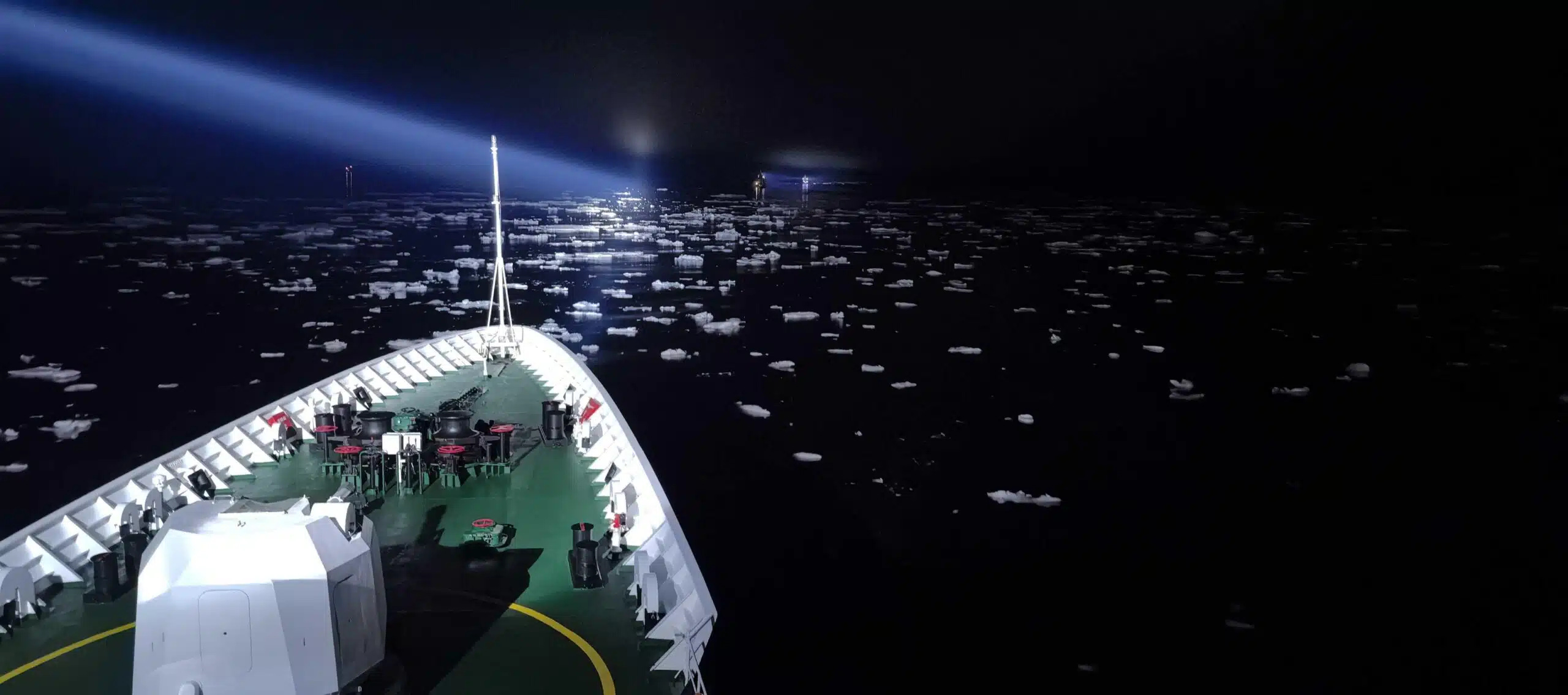
Here’s an excerpt that should get Secretary of Defense Pete Hegseth’s attention:
Both in 2021 and 2022, the U.S. Coast Guard encountered Chinese and Russian warships operating jointly off the coast of the Aleutian Islands. After a 2023 Russian-Chinese exercise near Alaska, U.S. news outlets like ABC highlighted concern of the event, calling it ‘unprecedented in size’. Suddenly Alaskan security issues received countrywide attention.
Moreover, for the first time, in summer of 2024 Chinese and Russian bombers were conducting joint operations in the Alaska Air Defense Identification Zone, albeit not violating US airspace. In September 2024, coast guard vessels from both countries conducted joint operations in the same region.
And finally, to go deeper on the Trump side of things, Charlie Kirk went to Greenland with Donald Trump Jr. and others in January last year and his video post on the visit - I Went to Greenland and Learned Why We Need to Make It State 51 - is well worth watching (take a Tums first, perhaps):
Oh, and of course there’s the climate question! See my recent conversation with Paul Bierman on his recent and unnerving work there:
It’s incredibly frightening rhetoric
Thanks much for this opportunity, Andy. Hope to join you all this evening for the segment.